
Germany’s Lost Opportunity
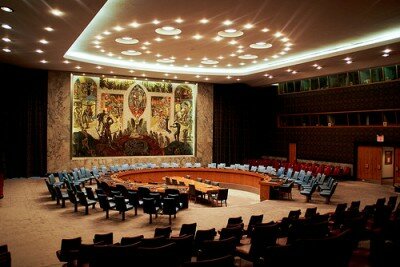 Accusations are flying in Berlin after the German government abstained from last week’s United Nations Security Council vote authorizing a no-fly zone over Libya. Foreign Minister Guido Westerwelle justified the decision by saying “we share the goals of the [U.N.] mandate, but German soldiers will not be sent to Libya.” Then why exactly did Germany decide to abstain from the vote, when a ‘yes’ would have in no way obligated its soldiers to participate in military operations? The same question is being asked by members of the German opposition, as well as surprisingly within the governing coalition. Former Foreign Minister Joschka Fischer, who together with Gerhard Schroeder first approved the ISAF mission in Afghanistan, has offered unusually harsh criticism of Westerwelle. Fischer claims that “Germany has lost its credibility in the United Nations and in the Middle East.” He also believes that Germany, which regained a non-permanent seat on the U.N. Security Council in January, “has turned the idea of a unified European Union foreign policy into a farce.” These are extremely harsh words from a former Foreign Minister who has otherwise remained relatively quiet since leaving office.
The German government is certainly trying to play catch-up with its critics. Yesterday Chancellor Angela Merkel’s cabinet voted to approve the deployment of 300 AWAC (Airborne Early Warning and Control) crewmen to Afghanistan, to display “solidarity with the alliance” fighting in Libya, noted coolly by the weekly German magazine, Der Spiegel, as “Germany’s Libya contribution.” This move comes after Germany deflected a request last December by ISAF Commander General David Petraeus to contribute troops to the aerial surveillance mission in Afghanistan. The government was concerned about gaining parliamentary approval for the troop increase at the time. The government’s attempt to divert attention from its Libya decision making process was visible Wednesday morning on the foreign ministry’s website, where the main focus has been placed on the AWAC mission in Afghanistan and not on the conflict in Libya.
The biggest problem with the U.N. abstention is the contradictory message it sends to Germany’s allies in Europe and to the United States. Minister Westerwelle had been an outspoken supporter of the democratic wave in the Middle East, personally visiting Tahrir Square in Cairo as a sign of his country’s support for freedom-seeking demonstrators. However, with his foreign ministry’s Libya abstention, Germany has effectively turned its back on another North African country, where political freedom is being violently snuffed out by a dictator bent on staying in power. Although a “yes” vote at the Security Council would not have required a troop commitment, the political signal would have been worth its weight in gold to the United States, Great Britain, and France, who have a keen interest in Germany playing a more assertive role on the world stage. An even more important signal would have been sent to rebels in Libya and demonstrators in the greater Middle East calling for similar freedoms. When the shooting stops, Germany’s UNSC abstention will not be forgotten quickly. As the German Foreign Minister said, with his country’s seat on the U.N. Security Council comes a “particular foreign policy responsibility.” Germany had the chance to act on this new commitment to world security and failed miserably.


